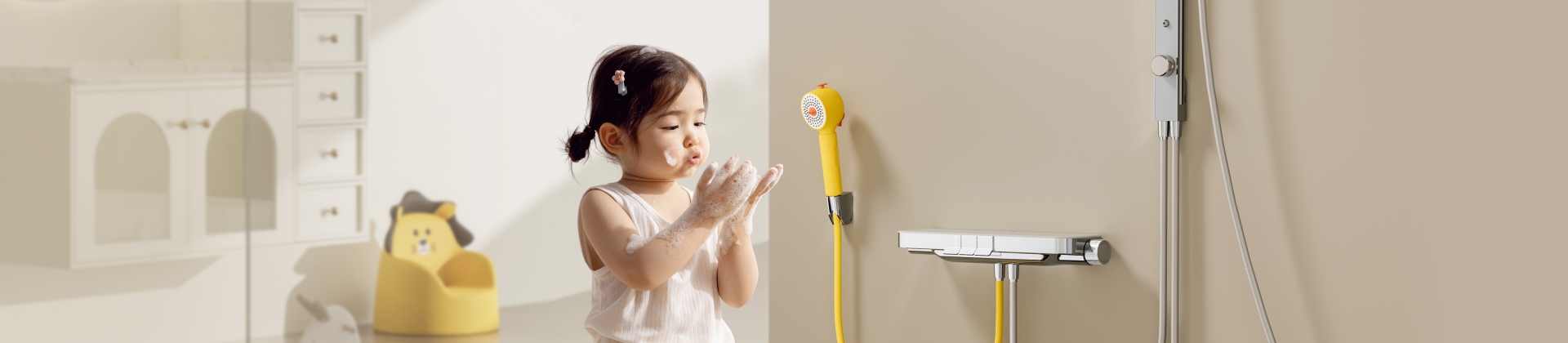
Safety begins before the baby enters the bathroom. Prepare the environment, check the water, maintain constant touch supervision and keep the shower short. Babies must never be left alone near bath or shower water, even for a moment.
For brands developing products with a reliable export supplier of baby shower heads, gentle spray performance is only one requirement. Grip, hose control, cleaning, instructions and destination-market safety standards also need consideration.
Newborns and young infants may be easier to wash in a stable infant bath or basin. Holding a baby while standing on a wet shower floor introduces slipping and handling risks.
A shared shower may be more manageable when:
The caregiver can maintain a secure two-hand hold
The floor has reliable slip resistance
Water can be controlled before reaching the baby
Supplies are already prepared
Another adult is available to help
The baby is healthy and calm
Parents and caregivers should follow individual advice from their pediatric healthcare professional.
Remove bottles and loose objects from the floor. Place a non-slip surface in the standing area and keep the room comfortably warm.
The towel and clean clothing should be close enough to reach without turning away or releasing the baby. Keep electrical devices outside the wet area.
Test the water before bringing the infant into contact with it. Use the wrist, elbow or an appropriate bath thermometer.
American Academy of Pediatrics guidance recommends setting the hottest temperature available at the faucet no higher than 120°F, approximately 49°C, to reduce scald risk. This is a maximum faucet setting, not a recommended infant bathing temperature. Actual bath or shower water must still be tested and should feel warm rather than hot.
Run cold water first when preparing mixed water, then add warmer water and mix thoroughly.
Keep at least one secure supporting hand on the baby at all times. Support the head and neck according to the baby’s developmental stage.
A bath seat, baby tub or shower product is a bathing aid—not a substitute for adult supervision. If the caregiver must leave, the baby must be taken along.
Direct the water toward the lower body first. Keep the spray away from the eyes, nose and mouth, and avoid strong concentrated modes.
A handheld product can provide better directional control than a fixed overhead shower, but the hose must not wrap around the baby or caregiver.
Our factory develops hand showers and related holders and accessories. Baby-oriented products can be evaluated for gentler spray structures, ergonomic handling and easier maintenance.
Wash one area at a time and rinse gently. Long shower sessions can make both the caregiver and infant cold and increase fatigue.
Turn off the water before stepping out. Transfer the baby to a dry towel and stable surface without walking unnecessarily across the wet floor.
A reliable export supplier of baby shower heads should be able to discuss:
Spray softness and coverage
Product materials
Nozzle cleanliness
One-hand operation
Hose and bracket matching
Leak and connection checks
Packaging warnings
Destination-market requirements
Production consistency
Buyers should not market a product as making unsupervised bathing safe. Product messaging must reinforce active caregiver supervision.
A gentle shower head can improve water control, but safe baby showering depends on preparation, secure holding, suitable temperature and uninterrupted supervision.
Create a baby shower product around controlled, gentle use. Send us your target age group, spray requirement, product concept and expected quantity to begin an OEM or export-supply discussion.