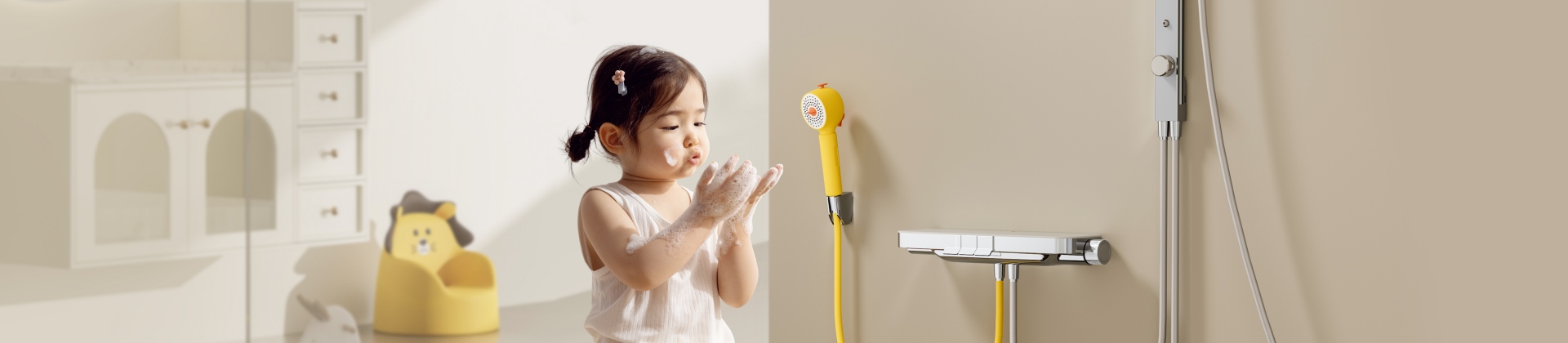
The best shower sprayer is one that matches the user, water pressure, installation position and intended task. A wide spray may be comfortable for daily bathing, while a concentrated mode is more effective for rinsing hair or cleaning shower walls.
A good sprayer for cleaning a shower is usually a handheld model with adequate hose reach, focused water delivery and a comfortable grip. It should reach the enclosure corners, rinse wall surfaces and clean around fixtures without forcing the user to stretch or disconnect components.
Bathroom sprayers are available in several forms, and each is designed for a different water-delivery task. Common types include handheld shower heads, fixed shower heads, rain shower heads, bidet sprayers, beauty sprayers and cleaning sprayers.
A rain head shower is a broad shower head designed to distribute water over a larger area with a rainfall-like pattern. It may be installed on a wall-mounted arm, a ceiling arm or as part of an exposed shower system.
Mineral deposits can gradually block water outlets and turn an even rainfall spray into weak or sideways streams. Learning how to clean a rain shower head correctly helps restore water coverage, protects the surface finish and reduces the need for premature replacement.
Rain shower head installation is different from fitting a small conventional shower head. A broad spray face needs sufficient clearance, correct orientation and a stable shower arm.
Uneven streams, sideways jets and reduced spray coverage often indicate mineral deposits in a rain shower head. Regular cleaning can restore performance before buildup blocks the nozzles or places unnecessary pressure on internal parts.
The short answer is: shower heads are widely standardized, but they are not completely universal. Many household shower heads can be attached to a conventional shower arm without modifying the plumbing.