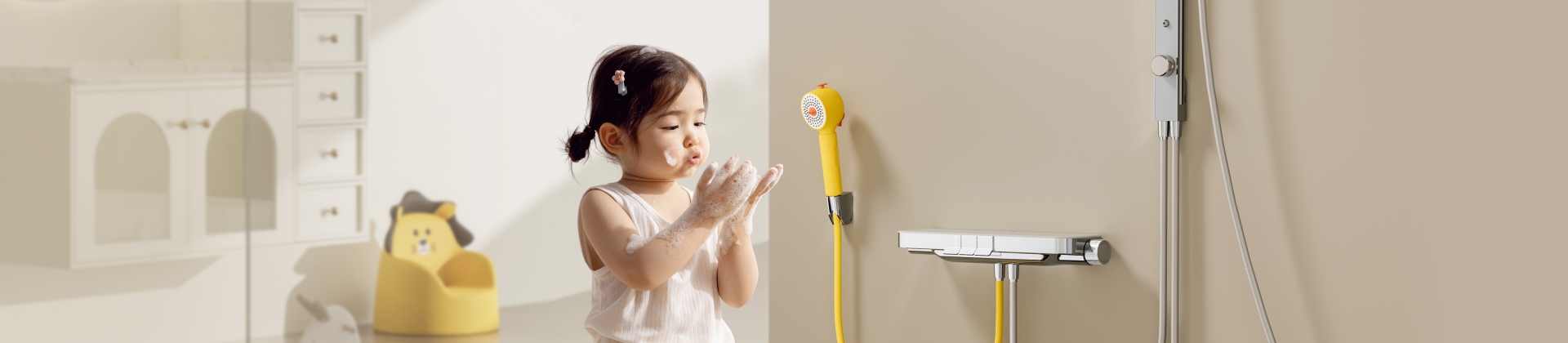
A standard wall-mounted shower head is commonly installed about 80 inches, or 2030 mm, above the finished shower floor. This is a practical reference rather than a universal requirement. The correct shower head height should reflect the users’ height, shower head type, spray angle, ceiling clearance and local building regulations.
Rain shower heads generally need more space above the tallest user, while handheld showers work better with an adjustable bracket or sliding bar. Hotels, apartments and multi-user bathrooms can therefore benefit from working with an adjustable shower head wholesale supplier that can provide compatible shower heads, rails, brackets and accessories as one system.
| Shower product | General installation reference | Main consideration |
|---|---|---|
| Fixed wall-mounted shower head | Around 1900–2100 mm | User height and spray angle |
| Overhead rain shower head | Commonly around 2100–2300 mm | Head clearance and ceiling height |
| Hand shower on fixed bracket | Often around 1800–2000 mm | Reach and hose length |
| Hand shower on sliding bar | Adjustable across the rail | Different users and seated use |
| Children’s shower position | Lower than an adult installation | Safe reach and adult supervision |
These figures are general planning references. Installers should follow the supplied product instructions and applicable local plumbing and accessibility requirements.
A fixed shower head should normally be positioned above the tallest regular user so that the spray does not strike only the head or force the person to bend.
For a traditional angled shower head, leaving approximately 150–300 mm above the tallest user is often a practical starting point. The final height still depends on the spray pattern. A wide spray may provide comfortable coverage from a higher position, while a focused jet may need more precise placement.
Guest bathrooms and hospitality projects must accommodate users whose height is unknown. A higher fixed outlet combined with a handheld shower can provide greater flexibility than relying on one fixed shower head alone.
An overhead rain shower head is designed to direct water downward rather than at an angle. It should be high enough to create comfortable coverage but not so high that water cools excessively or splashes beyond the intended showering area.
Before setting the outlet height, confirm:
Finished ceiling height
Shower head thickness
Shower arm length
Tallest expected user
Spray coverage
Water pressure and flow rate
Distance from the floor drain
Shower enclosure dimensions
A ceiling that is too low may require a thinner shower head or a wall-mounted arm. A very high ceiling may make a ceiling-mounted drop arm more practical.
Our rain shower head range includes round and square designs in several dimensions, allowing project buyers to match the shower head profile with the available bathroom space.
A fixed hand shower bracket provides a clean installation, but it cannot adapt easily to users of different heights. A shower rail or sliding bar allows the hand shower holder to move vertically and, depending on the design, adjust its angle.
This configuration is useful for:
Family bathrooms
Hotels and serviced apartments
Children’s bathrooms
Senior living facilities
Shower seats
Multi-generational homes
Public changing and shower areas
The rail must be installed where users can reach the holder safely. Its mounting points should avoid concealed pipes and electrical cables, and the wall structure must support repeated adjustment.
A handheld shower positioned high on the wall requires enough hose length to reach the intended bathing and cleaning areas. An excessively short hose restricts movement, while an unnecessarily long hose may touch the floor or form inconvenient loops.
Project specifications should coordinate the hand shower, hose, bracket or rail, outlet position and user requirements. Looking at each component separately often produces avoidable compatibility problems.
Our hand shower collection includes single-jet and multi-jet configurations. These products can be combined with suitable rails, brackets and bathroom accessories according to the required installation arrangement.
Accessible shower dimensions vary between countries and project types. Reach ranges, controls, shower seats, grab bars and handheld shower placement may all be regulated.
An adjustable handheld shower is often incorporated into accessible bathroom planning, but its exact mounting position should come from the project’s approved accessibility specification. A general online measurement should not replace local code review.
Our factory has specialized in showers, kitchen sprayers, sliding bars and bathroom accessories since 2009. Product development covers hand showers, rain shower heads, shower rails, brackets and related components for residential and commercial bathroom projects.
For OEM and project orders, buyers can discuss shower head style, spray functions, rail dimensions, bracket position, finish, packaging and accessory combinations. Coordinating these details before production helps contractors avoid discovering installation conflicts after products arrive on site.
Send us the bathroom type, user group, ceiling height, water outlet position, preferred shower head, required rail length, surface finish and order quantity. We can recommend a compatible product combination and prepare wholesale pricing for residential developments, hotels, sanitaryware distributors or private-label collections through our inquiry page.
Previous: How To Remove Water Restrictor From Shower Head?
Next: